SPI Debugging Guide
SPI Hardware Support
The X5 supports a total of 7 SPI controllers, of which 6 (SPI0–SPI5) are located in the LSIO subsystem and 1 (SPI6) is in the DSP subsystem. All SPI controllers support both controller and device modes.
On the RDK X5, the pins brought out are mainly on the 40-pin header, specifically SPI1 and SPI2. Please refer to the RDK X5 40-pin introduction for details. The other SPI ports are not available on the 40-pin header.
Linux SPI Driver Framework Overview
- spi driver layer: This layer mainly implements operations for the SPI hardware IP, and also implements the interfaces defined by the SPI framework.
- spi framework layer: This layer can be considered as an adaptation layer for the SPI driver. It defines a set of interfaces that the lower layer (driver) needs to implement, while providing a common interface that abstracts hardware details to the upper layers.
- spi char device layer: Provides nodes for the user space, making it easier for data exchange between user space and kernel space.
Code Path
X5 uses the NewThink (新思) SSI controller, and the driver code is located in the drivers/spi directory. The main files are as follows:
drivers/spi/spi-dw-core.c
drivers/spi/spi-dw-mmio.c
drivers/spi/spi-dw-dma.c
Controller Hardware Description
All SPI controllers on the X5 can operate in Controller/Device modes. The operational limitations for Controller and Device modes are as follows:
- SPI-Controller: Maximum frequency of 50MHz
- SPI-Device: Maximum frequency of 32MHz
All SPI controllers on the X5 can operate in either interrupt or DMA mode. The limitations for interrupt mode are as follows:
- SPI-Device:
- Rx: With the CPU running at a fixed frequency of 1.5GHz, it can achieve up to 32MHz.
- Tx: With the CPU running at a fixed frequency of 1.5GHz, it can achieve up to 16MHz.
- SPI-Controller: Normal communication is supported.
DTS Configuration Description
The device tree definitions for the X5 SPI controllers are located in the x5.dtsi file under the arch/arm64/boot/dts/hobot/ folder in the SDK package kernel directory.
Note: The nodes in x5.dtsi mainly declare SoC-level features and are independent of specific circuit boards. In most cases, these do not need to be modified.
The X5 SPI controller is disabled by default. Please enable the corresponding SPI controller in the appropriate DTS file based on your actual hardware configuration.
For example, to enable SPI2:
&spi2 {
	status = "okay";
	pinctrl-names = "default";
	pinctrl-0 = <&pinctrl_spi2>;
};
DTS Configuration for Using DMA
To use DMA, you need to bind the corresponding DMA handshake in the relevant DTS file. For example, to enable DMA for SPI2:
&spi2 {
	status = "okay";
	pinctrl-names = "default";
	pinctrl-0 = <&pinctrl_spi2>;
	dma-names = "tx", "rx";
	dmas = <&axi_dmac 25>, <&axi_dmac 24>;
};
When binding SPI6, you need to specify dsp_axi_dma, as shown below:
&spi6 {
	status = "okay";
	pinctrl-names = "default";
	pinctrl-0 = <&pinctrl_dsp_spi>;
	dma-names = "tx", "rx";
	dmas = <&dsp_axi_dma 21>, <&dsp_axi_dma 20>;
};
SPI DMA Handshake List:
| SPI | DMA TX | DMA RX |
|---|---|---|
| SPI0 | 20 | 21 |
| SPI1 | 22 | 23 |
| SPI2 | 24 | 25 |
| SPI3 | 26 | 27 |
| SPI4 | 28 | 29 |
| SPI5 | 30 | 31 |
| SPI6 | 21 | 22 |
SPI Function Verification
This section introduces the function verification of X5 SPI, including environment setup, test command execution, and test code.
Test Environment Preparation
Ensure that the kernel's CONFIG_SPI_SPIDEV is enabled:
/* arch/arm64/configs/hobot_x5_soc_defconfig */
...
CONFIG_SPI_SPIDEV=m
...
Ensure that a dummy device has been created under the SPI controller node to be tested in the current hardware's DTS.
&spi2 {
	spidev@2 {
		compatible = "dr,x5-spidev";
		spi-max-frequency = <32000000>;
		reg = <0>;
	};
}
SPI Internal Loopback Test
The SPI internal loopback test is only supported by SPI Controller. The principle is that the SPI hardware's TX FIFO sends data to the RX FIFO, forming a loopback.
The test command and expected results are as follows:
# modprobe spidev
# ./spidev_tc -D /dev/spidev2.0 -v -s 1000000 -m 3 -l -e 10 -t 1
   spi mode: 0x20
   bits per word: 8
   max speed: 1000000 Hz (1000 KHz)
   userspace spi read and write test, len=10 times=1
   test, times=0
   TX | 67 C6 69 73 51 FF 4A EC 29 CD __ __ __ __ __ __ __ __ __ __ __ __ __ __ __ __ __ __ __ __ __ __

   RX | 67 C6 69 73 51 FF 4A EC 29 CD __ __ __ __ __ __ __ __ __ __ __ __ __ __ __ __ __ __ __ __ __ __
SPI External Loopback Test
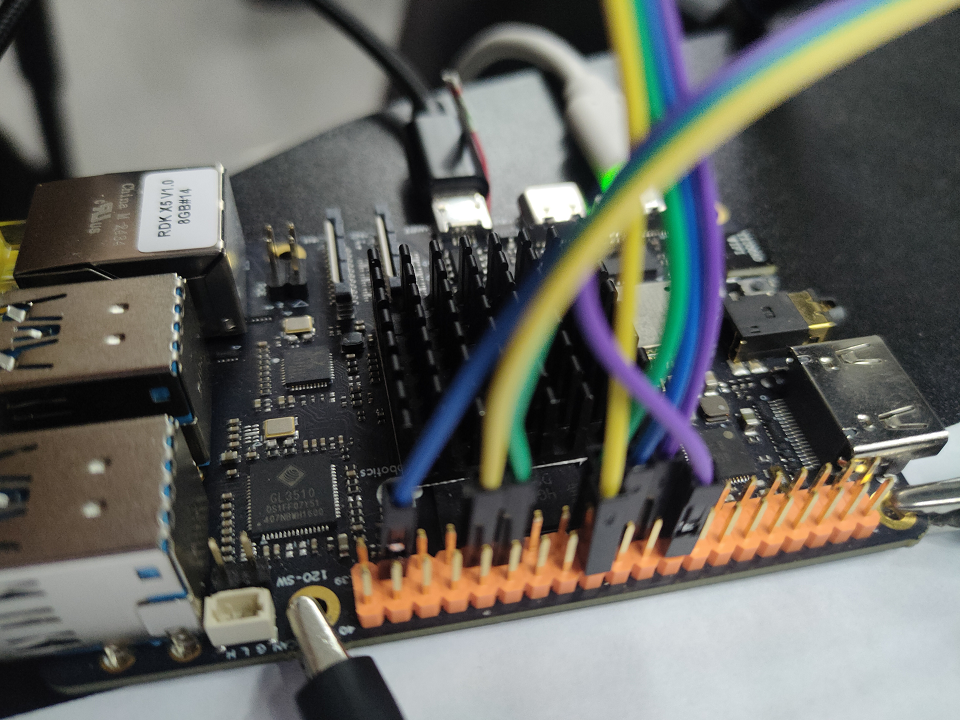
The SPI external loopback test involves setting up one SPI Device and one SPI Controller, with corresponding wires connected for the test.
&spi2 {
	status = "okay";
	pinctrl-names = "default";
	pinctrl-0 = <&pinctrl_spi2>;
	spi-slave;

	slave@0 {
		compatible = "dr,x5-spidev";
		spi-max-frequency = <32000000>;
		reg = <0>;
	};
}
Modify the SPI1 DTS to support Controller functionality: (SPI1 has two chip selects, so we define two device child nodes here. After the system starts up normally, this will be reflected in the file system as two devices, /dev/spi1.0 and /dev/spi1.1)
&spi1 {
	status = "okay";
	pinctrl-names = "default";
	pinctrl-0 = <&pinctrl_spi1 &pinctrl_spi1_ssn1>;

	spidev@0 {
		compatible = "dr,x5-spidev";
		spi-max-frequency = <32000000>;
		reg = <0>;
	};

	spidev@1 {
		compatible = "dr,x5-spidev";
		spi-max-frequency = <32000000>;
		reg = <1>;
	};
};
The test commands and results are as follows (with SPI2 as Device and SPI1.1 as Controller):
1. Open one terminal and operate the SPI device:

root@ubuntu:~# /app/chip_base_test/05_spi_test/spidev_tc -D /dev/spidev2.0 -e 1 -v -S 64 -I 1
spi mode: 0x0
bits per word: 8
max speed: 500000 Hz (500 kHz)
Userspace spi read test, test_len=64 iterations=1

(Note: After executing the above command, the program will keep waiting until it receives data sent from the SPI Controller.)


2. Open another terminal and operate the SPI controller:
root@ubuntu:~# /app/chip_base_test/05_spi_test/spidev_tc -D /dev/spidev1.1 -e 2 -v -S 64 -I 1
spi mode: 0x0
bits per word: 8
max speed: 500000 Hz (500 kHz)
Userspace spi write test, test_len=64 iterations=1
TX | 67 C6 69 73 51 FF 4A EC 29 CD BA AB F2 FB E3 46 7C C2 54 F8 1B E8 E7 8D 76 5A 2E 63 33 9F C9 9A  |g.isQ.J.)......F|.T.....vZ.c3...|
TX | 66 32 0D B7 31 58 A3 5A 25 5D 05 17 58 E9 5E D4 AB B2 CD C6 9B B4 54 11 0E 82 74 41 21 3D DC 87  |f2..1X.Z%]..X.^.......T...tA!=..|
Test times: 0
root@ubuntu:~#

(Note: After executing the above command, the SPI controller sends data out immediately.)


3. At this point, you can observe that the terminal of the SPI device will display the received data, with the overall status resembling the following result:

root@ubuntu:~# /app/chip_base_test/05_spi_test/spidev_tc -D /dev/spidev2.0 -e 1 -v -S 64 -I 1
spi mode: 0x0
bits per word: 8
max speed: 500000 Hz (500 kHz)
Userspace spi read test, test_len=64 iterations=1
RX | 67 C6 69 73 51 FF 4A EC 29 CD BA AB F2 FB E3 46 7C C2 54 F8 1B E8 E7 8D 76 5A 2E 63 33 9F C9 9A  |g.isQ.J.)......F|.T.....vZ.c3...|
RX | 66 32 0D B7 31 58 A3 5A 25 5D 05 17 58 E9 5E D4 AB B2 CD C6 9B B4 54 11 0E 82 74 41 21 3D DC 87  |f2..1X.Z%]..X.^.......T...tA!=..|
rate: tx 0.1kbps, rx 0.1kbps
Test times: 0
root@ubuntu:~#
When performing external loopback testing, the SPI Device program must be executed first, followed by the SPI Controller program. If the SPI Controller program is executed first and the SPI Device program later, data loss may occur during SPI reception due to controller-device synchronization issues. For multiple test runs, you can write a script to execute the test program repeatedly to ensure synchronization between the Controller and Device.
Appendix
Appendix 1: Test Case Source Code: spidev_tc.c
/*
* SPI testing utility (using spidev driver)
*
* Copyright (c) 2007 MontaVista Software, Inc.
* Copyright (c) 2007 Anton Vorontsov <avorontsov@ru.mvista.com>
*
* This program is free software; you can redistribute it and/or modify
* it under the terms of the GNU General Public License as published by
* the Free Software Foundation; either version 2 of the License.
*
* Cross-compile with cross-gcc -I/path/to/cross-kernel/include
*/
#include <stdint.h>
#include <unistd.h>
#include <stdio.h>
#include <stdlib.h>
#include <string.h>
#include <getopt.h>
#include <fcntl.h>
#include <time.h>
#include <sys/ioctl.h>
#include <linux/ioctl.h>
#include <sys/stat.h>
#include <linux/types.h>
#include <linux/spi/spidev.h>
#define ARRAY_SIZE(a) (sizeof(a) / sizeof((a)[0]))
static void pabort(const char *s)
{
perror(s);
abort();
}
static const char *device = "/dev/spidev1.1";
static uint32_t mode;
static uint8_t bits = 8;
static char *input_file;
static char *output_file;
static uint32_t speed = 500000;
static uint16_t delay;
static int verbose;
static int transfer_size;
static int iterations;
static int interval = 5; /* interval in seconds for showing transfer rate */
static int rw_mode = 0; //1: read, 2: write, 3: write and read
static int rw_len = 4;
static int rw_times = 5;
static int frameid_flag = 0;
static int crc_flag = 0;
static int heart_flag = 0;
static uint32_t tx_frameid = 0, rx_frameid = 0;
static uint32_t heart_interval = 5; // 5s
uint8_t default_tx[] = {
0xFF, 0xFF, 0xFF, 0xFF, 0xFF, 0xFF,
0x40, 0x00, 0x00, 0x00, 0x00, 0x95,
0xFF, 0xFF, 0xFF, 0xFF, 0xFF, 0xFF,
0xFF, 0xFF, 0xFF, 0xFF, 0xFF, 0xFF,
0xFF, 0xFF, 0xFF, 0xFF, 0xFF, 0xFF,
0xF0, 0x0D,
};
uint8_t heart_pack[] = {
0xAA, 0x55, 0xAA, 0x55,
0xAA, 0x55, 0xAA, 0x55,
0xAA, 0x55, 0xAA, 0x55,
0xAA, 0x55, 0xAA, 0x55,
};
uint8_t default_rx[ARRAY_SIZE(default_tx)] = {0, };
char *input_tx;
/** CRC table for the CRC-16. The poly is 0x8005 (x^16 + x^15 + x^2 + 1) */
static uint16_t const crc16_table[256] = {
0x0000, 0xC0C1, 0xC181, 0x0140, 0xC301, 0x03C0, 0x0280, 0xC241,
0xC601, 0x06C0, 0x0780, 0xC741, 0x0500, 0xC5C1, 0xC481, 0x0440,
0xCC01, 0x0CC0, 0x0D80, 0xCD41, 0x0F00, 0xCFC1, 0xCE81, 0x0E40,
0x0A00, 0xCAC1, 0xCB81, 0x0B40, 0xC901, 0x09C0, 0x0880, 0xC841,
0xD801, 0x18C0, 0x1980, 0xD941, 0x1B00, 0xDBC1, 0xDA81, 0x1A40,
0x1E00, 0xDEC1, 0xDF81, 0x1F40, 0xDD01, 0x1DC0, 0x1C80, 0xDC41,
0x1400, 0xD4C1, 0xD581, 0x1540, 0xD701, 0x17C0, 0x1680, 0xD641,
0xD201, 0x12C0, 0x1380, 0xD341, 0x1100, 0xD1C1, 0xD081, 0x1040,
0xF001, 0x30C0, 0x3180, 0xF141, 0x3300, 0xF3C1, 0xF281, 0x3240,
0x3600, 0xF6C1, 0xF781, 0x3740, 0xF501, 0x35C0, 0x3480, 0xF441,
0x3C00, 0xFCC1, 0xFD81, 0x3D40, 0xFF01, 0x3FC0, 0x3E80, 0xFE41,
0xFA01, 0x3AC0, 0x3B80, 0xFB41, 0x3900, 0xF9C1, 0xF881, 0x3840,
0x2800, 0xE8C1, 0xE981, 0x2940, 0xEB01, 0x2BC0, 0x2A80, 0xEA41,
0xEE01, 0x2EC0, 0x2F80, 0xEF41, 0x2D00, 0xEDC1, 0xEC81, 0x2C40,
0xE401, 0x24C0, 0x2580, 0xE541, 0x2700, 0xE7C1, 0xE681, 0x2640,
0x2200, 0xE2C1, 0xE381, 0x2340, 0xE101, 0x21C0, 0x2080, 0xE041,
0xA001, 0x60C0, 0x6180, 0xA141, 0x6300, 0xA3C1, 0xA281, 0x6240,
0x6600, 0xA6C1, 0xA781, 0x6740, 0xA501, 0x65C0, 0x6480, 0xA441,
0x6C00, 0xACC1, 0xAD81, 0x6D40, 0xAF01, 0x6FC0, 0x6E80, 0xAE41,
0xAA01, 0x6AC0, 0x6B80, 0xAB41, 0x6900, 0xA9C1, 0xA881, 0x6840,
0x7800, 0xB8C1, 0xB981, 0x7940, 0xBB01, 0x7BC0, 0x7A80, 0xBA41,
0xBE01, 0x7EC0, 0x7F80, 0xBF41, 0x7D00, 0xBDC1, 0xBC81, 0x7C40,
0xB401, 0x74C0, 0x7580, 0xB541, 0x7700, 0xB7C1, 0xB681, 0x7640,
0x7200, 0xB2C1, 0xB381, 0x7340, 0xB101, 0x71C0, 0x7080, 0xB041,
0x5000, 0x90C1, 0x9181, 0x5140, 0x9301, 0x53C0, 0x5280, 0x9241,
0x9601, 0x56C0, 0x5780, 0x9741, 0x5500, 0x95C1, 0x9481, 0x5440,
0x9C01, 0x5CC0, 0x5D80, 0x9D41, 0x5F00, 0x9FC1, 0x9E81, 0x5E40,
0x5A00, 0x9AC1, 0x9B81, 0x5B40, 0x9901, 0x59C0, 0x5880, 0x9841,
0x8801, 0x48C0, 0x4980, 0x8941, 0x4B00, 0x8BC1, 0x8A81, 0x4A40,
0x4E00, 0x8EC1, 0x8F81, 0x4F40, 0x8D01, 0x4DC0, 0x4C80, 0x8C41,
0x4400, 0x84C1, 0x8581, 0x4540, 0x8701, 0x47C0, 0x4680, 0x8641,
0x8201, 0x42C0, 0x4380, 0x8341, 0x4100, 0x81C1, 0x8081, 0x4040
};
static inline uint16_t crc16_byte(uint16_t crc, const uint8_t data)
{
return (crc >> 8) ^ crc16_table[(crc ^ data) & 0xff];
}
static uint16_t crc16(uint16_t crc, uint8_t const *buffer, size_t len)
{
while (len--)
crc = crc16_byte(crc, *buffer++);
return crc;
}
static void hex_dump(const void *src, size_t length, size_t line_size,
char *prefix)
{
int i = 0;
const unsigned char *address = src;
const unsigned char *line = address;
unsigned char c;
printf("%s | ", prefix);
while (length-- > 0) {
printf("%02X ", *address++);
if (!(++i % line_size) || (length == 0 && i % line_size)) {
if (length == 0) {
while (i++ % line_size)
printf("__ ");
}
printf(" | "); /* right close */
while (line < address) {
c = *line++;
printf("%c", (c < 33 || c == 255) ? 0x2E : c);
}
printf("\n");
if (length > 0)
printf("%s | ", prefix);
}
}
}
static void hex_dump2(const void *src, size_t length, size_t line_size,
char *prefix)
{
int i = 0;
const unsigned char *address = src;
printf("%s | ", prefix);
while (length-- > 0) {
printf("%02X ", *address++);
if (!(++i % line_size) || (length == 0 && i % line_size)) {
if (length == 0) {
while (i++ % line_size)
printf("__ ");
}
printf("\n");
if (length > 0)
printf("%s | ", prefix);
}
}
printf("\n");
}
/*
* Unescape - process hexadecimal escape character
* converts shell input "\x23" -> 0x23
*/
static int unescape(char *_dst, char *_src, size_t len)
{
int ret = 0;
int match;
char *src = _src;
char *dst = _dst;
unsigned int ch;
while (*src) {
if (*src == '\\' && *(src+1) == 'x') {
match = sscanf(src + 2, "%2x", &ch);
if (!match)
pabort("malformed input string");
src += 4;
*dst++ = (unsigned char)ch;
} else {
*dst++ = *src++;
}
ret++;
}
return ret;
}
static void transfer(int fd, uint8_t const *tx, uint8_t const *rx, size_t len)
{
int ret;
int out_fd;
struct spi_ioc_transfer tr = {
.tx_buf = (unsigned long)tx,
.rx_buf = (unsigned long)rx,
.len = len,
.delay_usecs = delay,
.speed_hz = speed,
.bits_per_word = bits,
};
struct timespec currentTime;
struct timespec currentTime1;
if (mode & SPI_TX_QUAD)
tr.tx_nbits = 4;
else if (mode & SPI_TX_DUAL)
tr.tx_nbits = 2;
if (mode & SPI_RX_QUAD)
tr.rx_nbits = 4;
else if (mode & SPI_RX_DUAL)
tr.rx_nbits = 2;
if (!(mode & SPI_LOOP)) {
if (mode & (SPI_TX_QUAD | SPI_TX_DUAL))
tr.rx_buf = 0;
else if (mode & (SPI_RX_QUAD | SPI_RX_DUAL))
tr.tx_buf = 0;
}
clock_gettime(CLOCK_REALTIME, ¤tTime);
long milliseconds = currentTime.tv_nsec / 1000000;
printf("before trans time: %ld ms\n", milliseconds);
ret = ioctl(fd, SPI_IOC_MESSAGE(1), &tr);
if (ret < 1)
pabort("can't send spi message");
clock_gettime(CLOCK_REALTIME, ¤tTime1);
long milliseconds1 = currentTime1.tv_nsec / 1000000;
printf("after trans time: %ld ms\n", milliseconds1);
printf("diff: %ld ms\n", (milliseconds1 - milliseconds));
if (verbose)
hex_dump(tx, len, 32, "TX");
if (output_file) {
out_fd = open(output_file, O_WRONLY | O_CREAT | O_TRUNC, 0666);
if (out_fd < 0)
pabort("could not open output file");
ret = write(out_fd, rx, len);
if (ret != len)
pabort("not all bytes written to output file");
close(out_fd);
}
if (verbose)
hex_dump(rx, len, 32, "RX");
}
static void transfer2(int fd, uint8_t const *tx, uint8_t const *rx, size_t len)
{
int ret;
int out_fd;
struct spi_ioc_transfer tr = {
.tx_buf = (unsigned long)tx,
.rx_buf = (unsigned long)rx,
.len = len,
.delay_usecs = delay,
.speed_hz = speed,
.bits_per_word = bits,
};
if (mode & SPI_TX_QUAD)
tr.tx_nbits = 4;
else if (mode & SPI_TX_DUAL)
tr.tx_nbits = 2;
if (mode & SPI_RX_QUAD)
tr.rx_nbits = 4;
else if (mode & SPI_RX_DUAL)
tr.rx_nbits = 2;
if (!(mode & SPI_LOOP)) {
if (mode & (SPI_TX_QUAD | SPI_TX_DUAL))
tr.rx_buf = 0;
else if (mode & (SPI_RX_QUAD | SPI_RX_DUAL))
tr.tx_buf = 0;
}
if (verbose && rw_mode >> 1)
hex_dump2(tx, len, 32, "TX");
ret = ioctl(fd, SPI_IOC_MESSAGE(1), &tr);
if (ret < 1) {
//pabort("can't send spi message");
printf("can't send spi message");
} else {
if (output_file) {
out_fd = open(output_file, O_WRONLY | O_CREAT | O_TRUNC, 0666);
if (out_fd < 0)
pabort("could not open output file");
ret = write(out_fd, rx, len);
if (ret != len)
pabort("not all bytes written to output file");
close(out_fd);
}
if (verbose && rw_mode&0x01)
hex_dump2(rx, len, 32, "RX");
}
if (strcmp(tx, rx) != 0) {
printf("SPI transfer failed\n");
exit(-1);
}
}
static void transfer3(int fd, uint8_t const *tx, uint8_t const *rx, size_t len)
{
int ret;
uint8_t const *p = rx;
struct spi_ioc_transfer tr = {
.tx_buf = (unsigned long)tx,
.rx_buf = (unsigned long)rx,
.len = len,
.delay_usecs = delay,
.speed_hz = speed,
.bits_per_word = bits,
};
if (mode & SPI_TX_QUAD)
tr.tx_nbits = 4;
else if (mode & SPI_TX_DUAL)
tr.tx_nbits = 2;
if (mode & SPI_RX_QUAD)
tr.rx_nbits = 4;
else if (mode & SPI_RX_DUAL)
tr.rx_nbits = 2;
if (!(mode & SPI_LOOP)) {
if (mode & (SPI_TX_QUAD | SPI_TX_DUAL))
tr.rx_buf = 0;
else if (mode & (SPI_RX_QUAD | SPI_RX_DUAL))
tr.tx_buf = 0;
}
hex_dump2(tx, len, 32, "TX");
ret = ioctl(fd, SPI_IOC_MESSAGE(1), &tr);
if (ret < 1) {
printf("can't send spi message");
} else {
hex_dump2(rx, len, 32, "RX");
if (frameid_flag) {
uint32_t *pframeid = (uint32_t *)p;
rx_frameid = *pframeid;
p += sizeof(uint32_t);
printf("device = %s, crc_val = %d", device, rx_frameid);
}
if (crc_flag) {
uint16_t crc_val_check = crc16(0, p, sizeof(heart_pack));
p += sizeof(heart_pack);
uint16_t *pcrc_val = (uint16_t *)p;
printf("device = %s, crc_val = %d, crc_val_check = %d", device, *pcrc_val, crc_val_check);
}
}
}
static void print_usage(const char *prog)
{
printf("Usage: %s [-DsbdiolHOLC3vpNR24SImetfch1]\n", prog);
puts(" -D --device device to use (default /dev/spidev1.1)\n"
" -s --speed max speed (Hz)\n"
" -d --delay delay (usec)\n"
" -b --bpw bits per word\n"
" -i --input input data from a file (e.g. \"test.bin\")\n"
" -o --output output data to a file (e.g. \"results.bin\")\n"
" -l --loop loopback\n"
" -H --cpha clock phase\n"
" -O --cpol clock polarity\n"
" -L --lsb least significant bit first\n"
" -C --cs-high chip select active high\n"
" -3 --3wire SI/SO signals shared\n"
" -v --verbose Verbose (show tx buffer)\n"
" -p Send data (e.g. \"1234\\xde\\xad\")\n"
" -N --no-cs no chip select\n"
" -R --ready slave pulls low to pause\n"
" -2 --dual dual transfer\n"
" -4 --quad quad transfer\n"
" -S --size transfer size\n"
" -I --iter iterations\n"
" -m --rw-mode 1 read, 2 write, 3 write and read\n"
" -e --rw-len read or write len\n"
" -t --rw-times read or write times\n"
" -f --frame-id support frame id\n"
" -c --crc support crc\n"
" -h --heart pack for test\n"
" -1 --heart pack interval(default: 5s)\n");
exit(1);
}
static void parse_opts(int argc, char *argv[])
{
while (1) {
static const struct option lopts[] = {
{ "device", 1, 0, 'D' },
{ "speed", 1, 0, 's' },
{ "delay", 1, 0, 'd' },
{ "bpw", 1, 0, 'b' },
{ "input", 1, 0, 'i' },
{ "output", 1, 0, 'o' },
{ "loop", 0, 0, 'l' },
{ "cpha", 0, 0, 'H' },
{ "cpol", 0, 0, 'O' },
{ "lsb", 0, 0, 'L' },
{ "cs-high", 0, 0, 'C' },
{ "3wire", 0, 0, '3' },
{ "no-cs", 0, 0, 'N' },
{ "ready", 0, 0, 'R' },
{ "dual", 0, 0, '2' },
{ "verbose", 0, 0, 'v' },
{ "quad", 0, 0, '4' },
{ "size", 1, 0, 'S' },
{ "iter", 1, 0, 'I' },
{ "rw-mode", 1, 0, 'm' },
{ "rw-len", 1, 0, 'e' },
{ "rw-times", 1, 0, 't' },
{ "frame-id", 0, 0, 'f' },
{ "crc", 0, 0, 'c' },
{ "heart", 0, 0, 'h' },
{ "interval", 0, 0, '1' },
{ NULL, 0, 0, 0 },
};
int c;
c = getopt_long(argc, argv, "D:s:d:b:i:o:lHOLC3NR24p:vS:I:m:e:t:fch1:",
lopts, NULL);
//printf("optind: %d\n", optind);
//printf("optarg: %s\n", optarg);
//printf("option: %c\n", c);
if (c == -1)
break;
switch (c) {
case 'D':
device = optarg;
break;
case 's':
speed = atoi(optarg);
break;
case 'd':
delay = atoi(optarg);
break;
case 'b':
bits = atoi(optarg);
break;
case 'i':
input_file = optarg;
break;
case 'o':
output_file = optarg;
break;
case 'l':
mode |= SPI_LOOP;
break;
case 'H':
mode |= SPI_CPHA;
break;
case 'O':
mode |= SPI_CPOL;
break;
case 'L':
mode |= SPI_LSB_FIRST;
break;
case 'C':
mode |= SPI_CS_HIGH;
break;
case '3':
mode |= SPI_3WIRE;
break;
case 'N':
mode |= SPI_NO_CS;
break;
case 'v':
verbose = 1;
break;
case 'R':
mode |= SPI_READY;
break;
case 'p':
input_tx = optarg;
break;
case '2':
mode |= SPI_TX_DUAL;
break;
case '4':
mode |= SPI_TX_QUAD;
break;
case 'S':
transfer_size = atoi(optarg);
break;
case 'I':
iterations = atoi(optarg);
break;
case 'm':
rw_mode = atoi(optarg);
break;
case 'e':
rw_len = atoi(optarg);
break;
case 't':
rw_times = atoi(optarg);
break;
case 'f':
frameid_flag = 1;
break;
case 'c':
crc_flag = 1;
break;
case 'h':
heart_flag = 1;
break;
case '1':
heart_interval = atoi(optarg);
break;
default:
print_usage(argv[0]);
break;
}
}
if (mode & SPI_LOOP) {
if (mode & SPI_TX_DUAL)
mode |= SPI_RX_DUAL;
if (mode & SPI_TX_QUAD)
mode |= SPI_RX_QUAD;
}
}
static void transfer_escaped_string(int fd, char *str)
{
size_t size = strlen(str);
uint8_t *tx;
uint8_t *rx;
tx = malloc(size);
if (!tx)
pabort("can't allocate tx buffer");
rx = malloc(size);
if (!rx)
pabort("can't allocate rx buffer");
size = unescape((char *)tx, str, size);
transfer(fd, tx, rx, size);
free(rx);
free(tx);
}
static void transfer_file(int fd, char *filename)
{
ssize_t bytes;
struct stat sb;
int tx_fd;
uint8_t *tx;
uint8_t *rx;
if (stat(filename, &sb) == -1)
pabort("can't stat input file");
tx_fd = open(filename, O_RDONLY);
if (tx_fd < 0)
pabort("can't open input file");
tx = malloc(sb.st_size);
if (!tx)
pabort("can't allocate tx buffer");
rx = malloc(sb.st_size);
if (!rx)
pabort("can't allocate rx buffer");
bytes = read(tx_fd, tx, sb.st_size);
if (bytes != sb.st_size)
pabort("failed to read input file");
transfer(fd, tx, rx, sb.st_size);
free(rx);
free(tx);
close(tx_fd);
}
static uint64_t _read_count;
static uint64_t _write_count;
static void show_transfer_rate(void)
{
static uint64_t prev_read_count, prev_write_count;
double rx_rate, tx_rate;
rx_rate = ((_read_count - prev_read_count) * 8) / (interval*1000.0);
tx_rate = ((_write_count - prev_write_count) * 8) / (interval*1000.0);
printf("rate: tx %.1fkbps, rx %.1fkbps\n", rx_rate, tx_rate);
prev_read_count = _read_count;
prev_write_count = _write_count;
}
static void transfer_buf(int fd, int len)
{
uint8_t *tx;
uint8_t *rx;
int i;
tx = malloc(len);
if (!tx)
pabort("can't allocate tx buffer");
for (i = 0; i < len; i++)
tx[i] = random();
rx = malloc(len);
if (!rx)
pabort("can't allocate rx buffer");
transfer(fd, tx, rx, len);
_write_count += len;
_read_count += len;
if (mode & SPI_LOOP) {
if (memcmp(tx, rx, len)) {
fprintf(stderr, "transfer error !\n");
hex_dump(tx, len, 32, "TX");
hex_dump(rx, len, 32, "RX");
exit(1);
}
}
free(rx);
free(tx);
}
static void transfer_read_write(int fd)
{
uint8_t *tx;
uint8_t *rx;
int i, j;
int len, times;
char str[64] = {0};
len = rw_len > 0 ? rw_len : 4;
times = rw_times > 0 ? rw_times : 4;
if (rw_mode == 2)
sprintf(str, "write");
else if (rw_mode == 3)
sprintf(str, "read and write");
else {
rw_mode = 1;
sprintf(str, "read");
}
printf("userspace spi %s test, len=%d times=%d\n", str, len, times);
tx = malloc(len + 4);
if (!tx)
pabort("can't allocate tx buffer");
rx = malloc(len + 4);
if (!rx)
pabort("can't allocate rx buffer");
for (j = 0; j < rw_times; j++) {
memset(tx, 0, len);
memset(rx, 0, len);
if (rw_mode >> 1) {
for (i = 0; i < len; i++)
tx[i] = random();
} else {
for (i = 0; i < len; i++)
tx[i] = i;
}
printf("test, times=%d\n", j);
transfer2(fd, tx, rx, len);
//sleep(2);
}
}
static void transfer_heart_pack(int fd)
{
uint8_t *p;
uint8_t *tx;
uint8_t *rx;
int len;
len = sizeof(heart_pack);
if (frameid_flag)
len += sizeof(uint32_t);
if (crc_flag)
len += sizeof(uint16_t);
tx = malloc(len);
if (!tx)
pabort("can't allocate tx buffer");
rx = malloc(len);
if (!rx)
pabort("can't allocate rx buffer");
while (1) {
memset(tx, 0 ,len);
memset(rx, 0, len);
p = tx;
if (frameid_flag) {
uint32_t *pframeid = (uint32_t *)p;
*pframeid = tx_frameid;
tx_frameid++;
p += sizeof(uint32_t);
printf("device = %s, crc_val = %d", device, *pframeid);
}
memcpy(p, heart_pack, sizeof(heart_pack));
p += sizeof(heart_pack);
if (crc_flag) {
uint16_t crc_val = crc16(0, heart_pack, sizeof(heart_pack));
uint16_t *pcrc_val = (uint16_t *)p;
*pcrc_val = crc_val;
printf("device = %s, crc_val = %d", device, crc_val);
}
transfer3(fd, tx, rx, len);
sleep(heart_interval);
}
}
int main(int argc, char *argv[])
{
int ret = 0;
int fd;
parse_opts(argc, argv);
fd = open(device, O_RDWR);
if (fd < 0)
pabort("can't open device");
/*
* spi mode
*/
ret = ioctl(fd, SPI_IOC_WR_MODE32, &mode);
if (ret == -1)
pabort("can't set spi mode");
ret = ioctl(fd, SPI_IOC_RD_MODE32, &mode);
if (ret == -1)
pabort("can't get spi mode");
/*
* bits per word
*/
ret = ioctl(fd, SPI_IOC_WR_BITS_PER_WORD, &bits);
if (ret == -1)
pabort("can't set bits per word");
ret = ioctl(fd, SPI_IOC_RD_BITS_PER_WORD, &bits);
if (ret == -1)
pabort("can't get bits per word");
/*
* max speed hz
*/
ret = ioctl(fd, SPI_IOC_WR_MAX_SPEED_HZ, &speed);
if (ret == -1)
pabort("can't set max speed hz");
ret = ioctl(fd, SPI_IOC_RD_MAX_SPEED_HZ, &speed);
if (ret == -1)
pabort("can't get max speed hz");
printf("spi mode: 0x%x\n", mode);
printf("bits per word: %d\n", bits);
printf("max speed: %d Hz (%d KHz)\n", speed, speed/1000);
if (input_tx && input_file)
pabort("only one of -p and --input may be selected");
if (input_tx)
transfer_escaped_string(fd, input_tx);
else if (input_file)
transfer_file(fd, input_file);
else if (transfer_size) {
struct timespec last_stat;
clock_gettime(CLOCK_MONOTONIC, &last_stat);
while (iterations-- > 0) {
struct timespec current;
transfer_buf(fd, transfer_size);
clock_gettime(CLOCK_MONOTONIC, ¤t);
if (current.tv_sec - last_stat.tv_sec > interval) {
show_transfer_rate();
last_stat = current;
}
}
printf("total: tx %.1fKB, rx %.1fKB\n",
_write_count/1024.0, _read_count/1024.0);
} else if (rw_mode) {
transfer_read_write(fd);
} else if (heart_flag) {
transfer_heart_pack(fd);
} else
transfer(fd, default_tx, default_rx, sizeof(default_tx));
close(fd);
return ret;
}
附录2 测试用例源码:Makefile
OUT_DIR = $(shell pwd)/_build/

.PHONY: build install clean

BIN_NAME = spidev_tc
SRCS = $(wildcard ./*.c)
OBJS = $(addprefix ${OUT_DIR}/, $(patsubst %.c, %.o, ${SRCS}))

BIN_TEST1 = ${OUT_DIR}/${BIN_NAME}
OBJECT = ${BIN_TEST1}

build: ${OBJECT}

Q:=

$(OBJECT): $(OBJS)
	$(Q)mkdir -p $(abspath $(dir $@))
	$(Q)echo CC $@
	$(Q)${CC} ${CFLAGS} ${INCS} $^ ${LDFLAGS} $(LIBS) -o $@

${OUT_DIR}/%.o: %.c
	$(Q)mkdir -p $(abspath $(dir $@))
	$(Q)echo CC $@
	$(Q)${CC} $(INCS) -c $< -o $@

clean :
	rm -rf $(OBJS) $(OBJECT)
FAQ
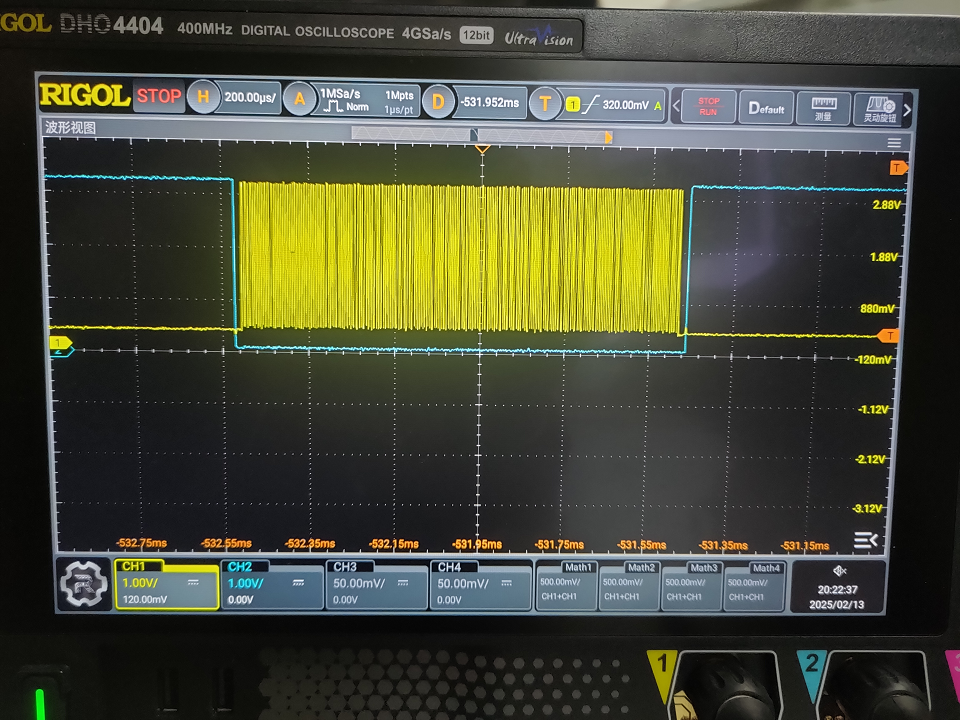
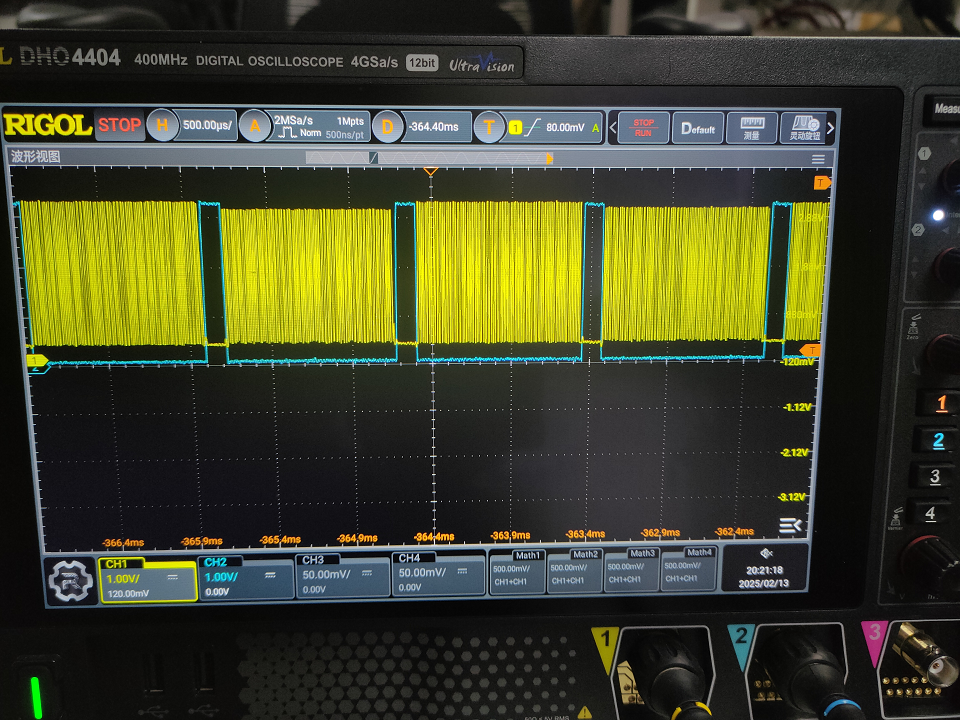
Q: All pins are connected and the program is executed, but the expected result is still not observed. What's wrong?
A: You can use an oscilloscope or other signal measurement equipment to connect to the pins you want to measure and take measurements. For example, in the external loopback test mentioned above, after confirming that the wiring is correct, measure the chip select and clock signals. Refer to the following: